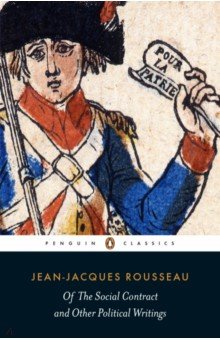
Of The Social Contract and Other Political Writings
Of The Social Contract and Oth...
Купить с кэшбэком
до 5,00%
до 5,00%
Кэшбэк до 5,00%
'Man was born free, and everywhere he is in chains.'
These are the famous opening words of a treatise that has stirred vigorous debate ever since its first publication in 1762. Rejecting the view that anyone has a natural right to wield authority over others, Rousseau argues instead for a pact, or 'social contract', that should exist between all the citizens of a state and that should be the source of sovereign power. From this fundamental premise, he goes on to consider issues of liberty and law, freedom and justice, arriving at a view of society that has seemed to some a blueprint for totalitarianism, to others a declaration of democratic principles.
These are the famous opening words of a treatise that has stirred vigorous debate ever since its first publication in 1762. Rejecting the view that anyone has a natural right to wield authority over others, Rousseau argues instead for a pact, or 'social contract', that should exist between all the citizens of a state and that should be the source of sovereign power. From this fundamental premise, he goes on to consider issues of liberty and law, freedom and justice, arriving at a view of society that has seemed to some a blueprint for totalitarianism, to others a declaration of democratic principles.
Отправьте эту ссылку другу. Если друг совершит покупку этого товара – вы получите за него кэшбэк.
Для получения кэшбэк-ссылки вам нужно Войти или Зарегистрироваться.
0,0
Просмотренные товары




Похожие товары магазина
-

I Met Lucky People. The Story of the Romani Gypsies
3 486,00 руб. -

-

Vanished Kingdoms. The History of Half-Forgotten Europe
5 338,00 руб. -

Freedom Is A Constant Struggle
3 244,00 руб. -

Волшебная краска
537,00 руб.
Другие товары магазина
-
The Gambler
631,00 руб. -

Otters' Moon
1 806,00 руб. -
The Last English King
3 325,00 руб. -

Развивающие игры на песке
1 039,00 руб. -

Сыграем в "Правда или вызов"!
226,00 руб.
Товары бренда PENGUIN
-

The Moor Stones. Starter Level
1 455,00 руб. -

Glory
1 916,00 руб. -

The Grapes of Wrath
3 169,00 руб. -

Brooklyn
3 169,00 руб. -

In the Country of Men
3 169,00 руб.